Non-Surgical Treatment for Back Pain, Neck Pain, Sciatica, and Disc Problems
Chronic back pain, neck discomfort, and radiating nerve pain can interfere with nearly every aspect of daily life. Whether you experience pain while sitting, standing, walking, exercising, or sleeping, finding an effective treatment that addresses the underlying source of discomfort is essential.
At Signature Chiropractic & Rehabilitation in Chattanooga, TN, spinal decompression therapy offers a non-surgical approach to managing certain disc-related spinal conditions. This specialized treatment uses controlled, gentle traction to reduce mechanical stress on spinal structures, improve comfort, and support rehabilitation.
For patients struggling with persistent lower back pain, sciatica, herniated discs, or degenerative disc conditions, spinal decompression may be an important component of a personalized chiropractic treatment plan.
Request an AppointmentWhat Is Spinal Decompression Therapy?
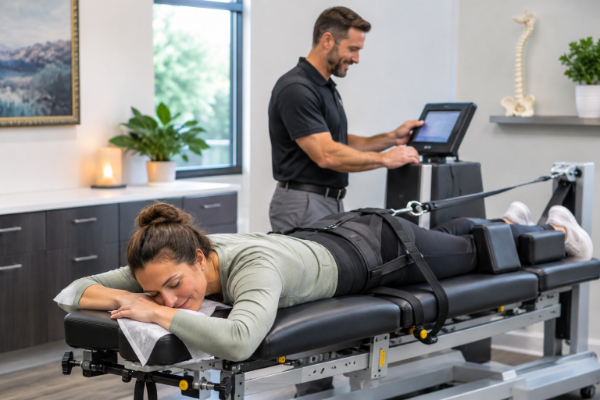
Spinal decompression therapy is a non-invasive treatment that uses a specialized traction table to apply controlled stretching forces to the spine.
The goal is to temporarily reduce mechanical loading on spinal discs and surrounding structures, potentially easing pressure-related symptoms and improving movement tolerance.
Unlike surgery, spinal decompression does not require incisions, anesthesia, or an extended recovery period.
How Does Spinal Decompression Work?
During treatment, patients lie comfortably on a specialized table while a computerized or mechanically controlled system delivers carefully regulated traction.
The treatment is designed to:
-
Gently stretch selected areas of the spine.
-
Reduce mechanical stress on spinal discs and joints.
-
Help relieve certain symptoms associated with nerve irritation.
-
Decrease muscle guarding and tension.
-
Improve tolerance for movement and rehabilitation exercises.
-
Support a broader conservative treatment program.
Although spinal decompression can provide symptom relief for appropriately selected patients, it is not guaranteed to reverse disc degeneration or permanently reposition herniated discs.
What Conditions Can Spinal Decompression Therapy Help?
Herniated Discs
A herniated disc occurs when disc material extends beyond its normal boundaries and can irritate nearby nerves.
Symptoms can include localized back pain, radiating leg pain, numbness, tingling, or weakness.
Spinal decompression may help reduce symptoms in selected patients as part of a comprehensive conservative care program.
Bulging Discs
A bulging disc extends beyond its usual margins without necessarily involving a focal herniation.
Some bulging discs cause no symptoms, while others contribute to nerve irritation or mechanical discomfort.
Decompression therapy may be considered when symptoms and examination findings indicate a potentially responsive disc-related condition.
Sciatica
Sciatica describes pain that travels along the distribution of the sciatic nerve, often extending from the lower back into the buttock or leg.
When symptoms are related to lumbar disc irritation, spinal decompression may be one treatment option.
Degenerative Disc Disease
Age-related disc changes can contribute to stiffness, reduced mobility, and chronic spinal discomfort.
Although decompression does not reverse degeneration, it may provide symptom relief for certain patients when combined with strengthening, mobility exercises, and other rehabilitation strategies.
Chronic Lower Back Pain
Persistent lower back pain can develop from several interacting factors, including disc changes, joint irritation, muscle weakness, and prolonged sitting.
A detailed assessment helps determine whether decompression is appropriate or whether another conservative treatment would be more beneficial.
Neck Pain and Cervical Disc Problems
Certain cervical traction techniques may help selected patients experiencing neck pain or symptoms radiating into the arms.
The treatment approach depends on the diagnosis, neurological findings, and individual safety considerations.
Benefits of Non-Surgical Spinal Decompression
Patients seeking spinal decompression therapy in Chattanooga often want an alternative to more invasive treatment.
Potential benefits include:
- Non-surgical treatment without incisions.
- No anesthesia required.
- Controlled and adjustable treatment forces.
- Potential reduction in certain disc-related symptoms.
- Improved comfort during everyday movement.
- Compatibility with chiropractic care and therapeutic exercise.
- Minimal downtime for most appropriately selected patients.
Results vary based on the condition, severity of symptoms, and individual response to treatment.
What to Expect During a Spinal Decompression Appointment
Step 1: Comprehensive Evaluation
Your provider reviews your symptoms, medical history, physical examination findings, and available diagnostic imaging when appropriate.
This evaluation helps identify whether your symptoms are consistent with a condition that may respond to decompression.
Step 2: Personalized Treatment Settings
If decompression is appropriate, the provider selects treatment positioning, traction force, and session duration based on your condition and comfort.
Step 3: Gentle, Controlled Traction
During treatment, the system applies intermittent or sustained traction to the targeted spinal region.
Patients commonly describe the sensation as a gentle pulling or stretching.
Step 4: Rehabilitation and Follow-Up
Decompression may be combined with therapeutic exercises, chiropractic care, posture education, and activity modifications to support functional improvement.
Spinal Decompression vs. Traditional Chiropractic Adjustments
Spinal decompression and chiropractic adjustments are different treatments that may serve complementary purposes.
|
Spinal decompression |
Chiropractic adjustments |
|---|---|
|
Uses controlled traction |
Uses targeted manual or instrument-assisted force |
|
Primarily targets mechanical spinal loading |
Primarily addresses joint movement and musculoskeletal function |
|
Often considered for selected disc-related symptoms |
Often used for certain spinal and joint-related complaints |
|
Usually performed on a traction table |
Performed using specific chiropractic techniques |
The most appropriate treatment depends on the patient’s diagnosis, examination findings, and goals.
Who Is a Good Candidate for Spinal Decompression?
Spinal decompression may be considered for patients experiencing persistent disc-related back or neck pain who have not achieved sufficient relief through initial conservative treatment.
It is not appropriate for everyone. Certain fractures, spinal instability, malignancies, severe osteoporosis, and other medical conditions may make traction unsafe.
Patients with new or worsening weakness, loss of bladder or bowel control, or numbness around the groin require urgent medical evaluation rather than routine decompression treatment.
Frequently Asked Questions About Spinal Decompression Therapy
Is spinal decompression therapy painful?
Treatment is generally designed to be comfortable, using controlled traction settings. Some patients experience temporary soreness or increased symptoms. Treatment should be adjusted or stopped if significant discomfort occurs.
How many spinal decompression sessions will I need?
The number of sessions depends on the diagnosis, severity of symptoms, and response to care. Your provider should reassess progress regularly rather than assume every patient requires the same number of visits.
Can spinal decompression help sciatica?
Spinal decompression may help selected patients whose sciatica is associated with lumbar disc problems. It is not effective for every cause of radiating leg pain.
Is spinal decompression better than surgery?
Spinal decompression is less invasive, but it is not a substitute for surgery when serious neurological compression or another surgical indication is present. Treatment decisions should be based on the patient’s specific condition.
Can decompression therapy help a herniated disc?
Some patients with symptomatic disc herniations experience improvement with traction-based treatment. Results vary, and decompression is generally most appropriate as part of a broader rehabilitation plan.
How long does a spinal decompression appointment take?
The duration depends on the equipment, treatment protocol, and additional services provided. Your provider will explain the expected appointment length before beginning care.
Schedule Spinal Decompression Therapy in Chattanooga, TN
Living with persistent back pain, neck pain, or sciatica can make everyday activities unnecessarily difficult.
At Signature Chiropractic & Rehabilitation, patients in Chattanooga and surrounding communities can explore non-surgical treatment options designed to improve comfort, mobility, and physical function.
Contact Signature Chiropractic & Rehabilitation to schedule an evaluation and find out whether spinal decompression therapy is appropriate for your condition.
Request an Appointment