Non-Invasive Treatment for Chronic Pain and Soft Tissue Injuries
Advanced Treatment for Tendon Pain, Plantar Fasciitis, Sports Injuries, and Musculoskeletal Conditions
Persistent tendon pain, chronic muscle discomfort, and repetitive strain injuries can make walking, exercising, working, and enjoying everyday activities difficult. When rest, stretching, and traditional conservative treatments have not provided sufficient relief, shockwave therapy offers another non-invasive treatment option.
At Signature Chiropractic & Rehabilitation, shockwave therapy can be incorporated into a comprehensive musculoskeletal rehabilitation program to address selected chronic tendon and soft tissue conditions.
This technology delivers targeted acoustic energy to affected tissues, stimulating biological responses associated with tissue repair and pain modulation. For appropriately selected patients, shockwave therapy can improve pain and function without surgery or injections.
Request an AppointmentWhat Is Shockwave Therapy?
Shockwave therapy, commonly called extracorporeal shockwave therapy (ESWT), is a non-invasive treatment that delivers acoustic energy to targeted musculoskeletal tissues.
Depending on the equipment, treatment may use focused shockwaves or radial pressure waves. Although these technologies differ in how energy is generated and delivered, both are used in certain musculoskeletal rehabilitation settings.
Shockwave therapy is especially relevant for selected chronic tendon disorders, where repeated mechanical loading and degenerative tissue changes contribute to persistent pain.
How Does Shockwave Therapy Work?
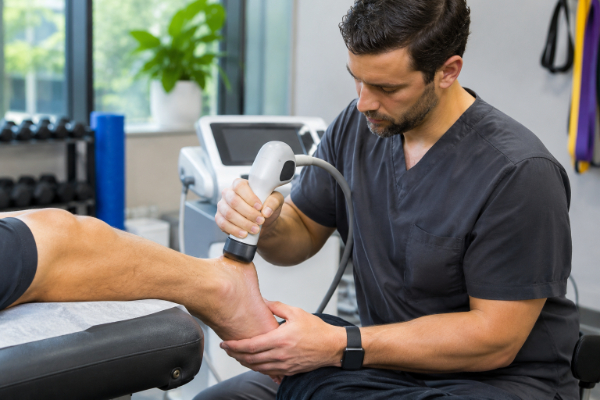
During treatment, a handheld applicator delivers acoustic pulses to the affected area.
These pulses create mechanical stimulation that can influence cellular signaling, local tissue responses, and pain-processing mechanisms.
Potential therapeutic effects include:
- Reducing pain associated with certain chronic tendon conditions.
- Stimulating biological responses involved in tissue remodeling.
- Improving tolerance for therapeutic movement and exercise.
- Supporting rehabilitation of chronically overloaded tendons.
- Improving function in selected musculoskeletal conditions.
The degree of improvement depends on the diagnosis, treatment parameters, and individual response.
What Conditions Can Shockwave Therapy Treat?
Plantar Fasciitis and Chronic Heel Pain
Plantar fasciitis, also called plantar fasciopathy, is one of the most extensively studied applications of extracorporeal shockwave therapy.
The condition commonly causes sharp heel pain when taking the first steps in the morning or after prolonged sitting.
For patients with persistent plantar heel pain, shockwave therapy can provide meaningful pain reduction and functional improvement.
Achilles Tendinopathy
Achilles tendinopathy develops when the tendon connecting the calf muscles to the heel becomes painful and sensitive to loading.
Shockwave therapy may be used alongside progressive strengthening exercises to help manage persistent symptoms.
Tennis Elbow
Lateral epicondylitis, commonly known as tennis elbow, causes pain along the outside of the elbow, particularly during gripping and lifting.
Shockwave therapy is sometimes used for persistent cases, although research findings are mixed and treatment response varies.
Patellar Tendinopathy
Patellar tendinopathy, sometimes called jumper’s knee, commonly affects athletes who participate in running and jumping activities.
Shockwave therapy may be considered as an adjunct to structured tendon-loading rehabilitation, although its effectiveness is less established than for chronic plantar heel pain.
Shoulder Calcific Tendinopathy
Calcium deposits within the rotator cuff tendons can contribute to shoulder pain and limited movement.
Focused shockwave therapy has demonstrated benefits for selected cases of calcific shoulder tendinopathy. Treatment selection depends on the location and characteristics of the calcium deposits.
Chronic Musculoskeletal Pain
Certain chronic soft tissue pain conditions may be considered for acoustic wave treatment after a thorough assessment.
However, not every type of muscle pain or joint pain responds to shockwave therapy, and accurate diagnosis remains essential.
Benefits of Shockwave Therapy
Non-Invasive Treatment
Shockwave therapy does not require surgical incisions and is commonly performed in an outpatient setting.
No Routine Anesthesia
Many treatment protocols can be performed without anesthesia, although discomfort levels vary.
Short Treatment Sessions
Treatment sessions are often relatively brief, depending on the condition, device, and treatment protocol.
Supports Functional Rehabilitation
Shockwave therapy can be integrated with therapeutic exercise, mobility training, and activity modifications.
Potential Long-Term Improvement
Some patients experience continued improvement over several weeks following a treatment series, particularly when treatment is combined with appropriate rehabilitation.
What Happens During a Shockwave Therapy Appointment?
Initial Evaluation
A provider assesses your medical history, pain location, symptoms, activity limitations, and physical examination findings.
Additional diagnostic testing may be recommended when needed to confirm the diagnosis.
Targeted Treatment
A coupling gel is applied to the skin, and the treatment applicator delivers acoustic pulses to the targeted tissue.
The provider adjusts the treatment settings according to the device, condition, and patient tolerance.
Post-Treatment Recommendations
Patients may experience temporary tenderness, redness, or soreness after treatment.
Activity recommendations depend on the treated tissue and treatment protocol. High-impact exercise or heavy loading may need to be modified temporarily.
Progress Assessment
Treatment response is evaluated over time using pain levels, movement tolerance, and functional improvements.
Shockwave Therapy and Chiropractic Rehabilitation
Chiropractic care and shockwave therapy address different components of musculoskeletal function.
Chiropractic treatment may focus on joint mobility and movement-related discomfort, while shockwave therapy targets selected soft tissue conditions.
When clinically appropriate, a comprehensive program may include:
- Shockwave therapy.
- Chiropractic adjustments.
- Progressive strengthening exercises.
- Mobility and flexibility training.
- Biomechanical assessment.
- Activity modification and injury prevention education.
Combining appropriate treatments can address both localized symptoms and the physical demands contributing to recurrent discomfort.
Who Is a Candidate for Shockwave Therapy?
Shockwave therapy may be considered for adults with certain chronic tendon conditions, particularly when symptoms have persisted despite initial conservative treatment.
It may not be appropriate for patients with certain bleeding disorders, active infections in the treatment area, suspected malignancy at the treatment site, or other contraindications.
Pregnancy, anticoagulant medication use, and treatment near sensitive anatomical structures require additional assessment.
Frequently Asked Questions About Shockwave Therapy
Does shockwave therapy hurt?
Patients commonly describe the sensation as rapid tapping or pulsing against the skin. Some discomfort can occur, especially over sensitive tissues. Treatment intensity can often be adjusted.
How many shockwave therapy sessions are needed?
Many protocols involve several sessions over multiple weeks. The appropriate number depends on the diagnosis, device, and treatment response.
Is shockwave therapy the same as electrical stimulation?
No. Shockwave therapy delivers acoustic mechanical energy, while electrical stimulation uses electrical currents to influence nerves or muscles.
Can shockwave therapy help plantar fasciitis?
Yes. Extracorporeal shockwave therapy has clinical evidence supporting its use for selected cases of persistent plantar heel pain.
Can shockwave therapy help chronic tendon injuries?
It can improve symptoms in certain chronic tendon disorders. Outcomes differ by tendon location, treatment protocol, and whether appropriate exercise rehabilitation is included.
Is shockwave therapy an alternative to surgery?
For some conditions, it is a conservative option that can be considered before surgery. It does not replace surgery when a significant structural injury requires operative treatment.
How quickly will I notice results?
Some patients experience early symptom improvement, while others notice gradual changes over several weeks. A meaningful response cannot be guaranteed.
Explore Shockwave Therapy in Chattanooga, TN
Chronic tendon pain and recurring musculoskeletal discomfort do not always require invasive treatment.
For patients seeking a non-surgical approach to managing selected soft tissue conditions, shockwave therapy may provide an additional pathway toward improved comfort, mobility, and daily function.
Contact Signature Chiropractic & Rehabilitation to ask about shockwave therapy availability and schedule a musculoskeletal evaluation.
Request an Appointment