Non-Invasive Muscle and Tendon Pain Treatment
Targeted Acoustic Wave Therapy for Chronic Soft Tissue Pain, Tendon Injuries, and Rehabilitation
Chronic tendon pain, muscle tightness, and repetitive strain injuries can gradually limit mobility, reduce physical performance, and interfere with everyday activities. When symptoms continue despite rest, stretching, or exercise modifications, targeted rehabilitation may be necessary.
Radial Pressure Wave Therapy (RPWT) is a non-invasive treatment that uses mechanical acoustic pulses to stimulate targeted soft tissues. This treatment is commonly used in musculoskeletal rehabilitation for selected chronic tendon conditions and pain-related movement limitations.
At Signature Chiropractic & Rehabilitation, radial pressure wave therapy can be considered as part of an individualized rehabilitation approach focused on reducing pain, improving movement, and restoring functional activity.
Request an AppointmentWhat Is Radial Pressure Wave Therapy?
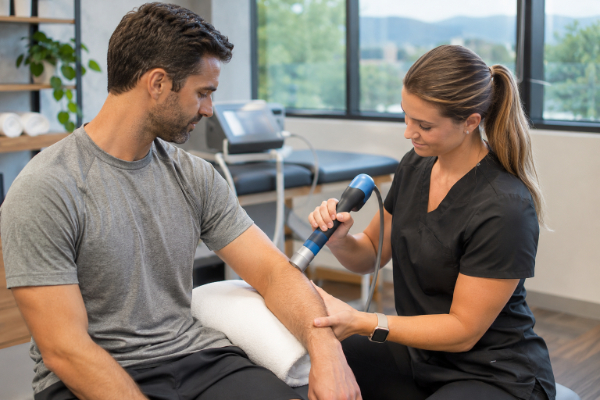
Radial pressure wave therapy is a treatment that delivers acoustic pressure pulses through a handheld applicator placed against the skin.
The mechanical energy spreads outward from the applicator into the surrounding tissues, with the greatest energy concentrated closer to the skin surface.
The treatment is often referred to as radial shockwave therapy, although radial pressure waves differ physically from focused extracorporeal shockwaves.
How Does Radial Pressure Wave Therapy Work?
A specialized device generates repeated mechanical pulses that travel through the skin into targeted muscles, tendons, and connective tissues.
These pulses produce mechanical stimulation that may influence local pain sensitivity and tissue responses associated with rehabilitation.
The treatment is intended to:
-
Reduce symptoms associated with certain chronic tendon disorders.
-
Improve tolerance for movement and therapeutic loading.
-
Provide targeted mechanical stimulation to affected soft tissues.
-
Support functional rehabilitation.
-
Complement strengthening and mobility programs.
Radial pressure wave therapy does not directly repair every type of tissue injury, and its effectiveness varies by condition.
What Conditions Can Radial Pressure Wave Therapy Help?
Plantar Fasciitis and Heel Pain
Chronic plantar heel pain commonly causes discomfort when standing after rest, walking long distances, or participating in sports.
Radial pressure wave therapy is one non-surgical option for selected cases of persistent plantar fasciopathy.
Treatment may be combined with calf stretching, foot strengthening, footwear recommendations, and progressive activity management.
Achilles Tendon Pain
Persistent Achilles tendon discomfort can interfere with walking, climbing stairs, running, and recreational activities.
Radial pressure wave therapy may be incorporated into rehabilitation for selected cases of Achilles tendinopathy.
Progressive tendon-loading exercises remain an important component of treatment.
Tennis Elbow and Forearm Tendon Pain
Repetitive gripping, lifting, typing, and sports activities can contribute to lateral elbow pain.
Radial pressure wave therapy may be considered for persistent symptoms, although the clinical evidence is inconsistent and other rehabilitation approaches may be preferable.
Patellar Tendon Pain
Pain below the kneecap is common in athletes who participate in jumping and running activities.
Radial pressure wave therapy is sometimes used as an adjunctive treatment, but structured strengthening and load management remain central to rehabilitation.
Myofascial Pain and Muscle Tenderness
Myofascial pain involves localized muscle tenderness and discomfort that can affect movement.
Radial pressure wave therapy has been investigated for certain myofascial pain conditions, including painful muscle trigger points.
Some studies report short-term pain reduction, but results vary and the evidence is less established than for plantar heel pain.
Shoulder and Rotator Cuff-Related Pain
Some patients with persistent shoulder symptoms may benefit from acoustic wave treatment, depending on the diagnosis.
Focused shockwave therapy has stronger evidence for certain calcific rotator cuff conditions than radial pressure wave therapy, making device selection important.
Benefits of Radial Pressure Wave Therapy
Non-Surgical and Non-Invasive
Radial pressure wave therapy does not require incisions, needles, or surgical procedures.
Targeted Soft Tissue Treatment
The applicator allows the provider to direct mechanical stimulation toward selected areas of pain and tissue sensitivity.
Supports Rehabilitation
Treatment can be integrated into programs designed to improve strength, mobility, and tolerance for daily activities.
Minimal Recovery Time
Most patients can resume routine daily activities following treatment, although temporary soreness and activity restrictions may apply.
Personalized Treatment Parameters
Pulse frequency, pressure settings, and treatment duration can be adjusted based on the device, treatment area, and patient tolerance.
Radial Pressure Wave Therapy vs. Focused Shockwave Therapy
Although the terms are sometimes used interchangeably, radial pressure wave therapy and focused shockwave therapy are not identical.
|
Radial pressure wave therapy |
Focused shockwave therapy |
|---|---|
|
Produces pressure pulses that spread outward |
Concentrates acoustic energy at a selected focal region |
|
Greatest energy is generally closer to the applicator |
Energy can be focused at a predetermined tissue depth |
|
Commonly used for selected superficial tendon and soft tissue conditions |
Used for selected tendon, calcific, and deeper musculoskeletal conditions |
|
Uses device-specific pressure and frequency settings |
Uses device-specific energy and focal-depth settings |
Neither treatment is automatically superior for every condition. The best option depends on the diagnosis, tissue depth, available equipment, and clinical evidence.
What to Expect During Radial Pressure Wave Therapy
Step 1: Musculoskeletal Assessment
The provider evaluates your symptoms, medical history, pain location, movement limitations, and treatment goals.
Step 2: Treatment Preparation
A coupling gel is applied to the skin over the targeted area.
Step 3: Acoustic Pulse Application
The handheld applicator delivers a series of mechanical pressure pulses.
Patients commonly experience a tapping or vibrating sensation, which may become uncomfortable over particularly sensitive tissues.
Step 4: Rehabilitation Recommendations
After treatment, the provider may recommend specific exercises, temporary activity modifications, or other rehabilitation strategies.
Step 5: Follow-Up Evaluation
Treatment effectiveness is assessed through changes in pain, mobility, strength, and functional performance.
Combining Radial Pressure Wave Therapy With Chiropractic Care
Radial pressure wave therapy can complement chiropractic rehabilitation when patients experience both soft tissue symptoms and movement-related musculoskeletal limitations.
A personalized treatment program may incorporate chiropractic adjustments, therapeutic exercises, mobility training, posture education, and gradual return-to-activity planning.
For example, a patient with persistent heel pain may benefit from radial pressure wave therapy alongside foot strengthening and calf-loading exercises. A patient with chronic tendon pain may need progressive resistance training to improve the tissue’s ability to tolerate daily activity.
The goal is not simply to provide temporary symptom relief but to improve the patient’s ability to move comfortably and participate in meaningful activities.
Who Should Avoid Radial Pressure Wave Therapy?
Radial pressure wave therapy is not suitable for every patient or every condition.
Contraindications and precautions may include:
- Active infection in the treatment area.
- Suspected or confirmed malignancy at the treatment site.
- Certain bleeding disorders or anticoagulant use.
- Pregnancy when treatment would involve potentially sensitive regions.
- Acute fractures or other conditions requiring a different treatment approach.
- Treatment near sensitive nerves, blood vessels, or organs without appropriate safety precautions.
A qualified provider should assess treatment suitability before beginning care.
Frequently Asked Questions About Radial Pressure Wave Therapy
What is radial pressure wave therapy used for?
Radial pressure wave therapy is used in musculoskeletal rehabilitation for selected chronic tendon conditions, including persistent plantar heel pain and some other tendon-related disorders.
Is radial pressure wave therapy the same as shockwave therapy?
Radial pressure wave therapy is often marketed as radial shockwave therapy, but the acoustic waves differ from focused shockwaves. Both technologies are used in musculoskeletal treatment.
Does radial pressure wave therapy hurt?
Patients may experience a tapping sensation or temporary discomfort during treatment. The provider can often adjust treatment settings to improve tolerance.
How many treatments will I need?
Treatment protocols commonly involve multiple sessions, but the appropriate schedule depends on the condition, device, and response to treatment.
Can radial pressure wave therapy help plantar fasciitis?
Yes. Clinical research supports radial pressure wave therapy as one treatment option for selected patients with persistent plantar heel pain.
Can radial pressure wave therapy break up scar tissue?
Claims that radial pressure waves directly break apart scar tissue are not well established. The treatment’s proposed benefits involve mechanical stimulation, pain modulation, and biological tissue responses.
Is radial pressure wave therapy safe?
It is generally well tolerated when used appropriately. Temporary soreness, redness, bruising, or increased tenderness can occur. Proper patient selection and treatment settings are important.
How long does it take to recover after treatment?
Most patients do not require prolonged downtime, although the provider may recommend temporarily modifying strenuous activity or heavy loading of the treated area.
Can radial pressure wave therapy be combined with chiropractic adjustments?
Yes, when clinically appropriate. The treatments address different aspects of musculoskeletal care and may be incorporated into a broader rehabilitation program.
Radial Pressure Wave Therapy in Chattanooga, TN
Persistent tendon pain and chronic soft tissue discomfort can make it difficult to stay active and enjoy daily life.
Radial pressure wave therapy provides a non-invasive treatment option for selected musculoskeletal conditions, particularly when incorporated into a comprehensive rehabilitation program.
Contact Signature Chiropractic & Rehabilitation to learn whether radial pressure wave therapy is available and appropriate for your symptoms.
Request an Appointment